
Capillaire platen en buizen
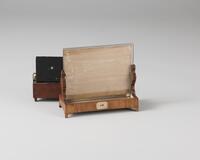
Object numberFK 0089
TitleCapillaire platen en buizen
DescriptionOpklimming van vochten tusschen glas
LabelHet verschijnsel dat vloeistof in een nauwe buis of een andere nauwe doorgang aangezogen of juist weggedrukt wordt, noemt men capillaire werking. Dit verschijnsel werd in 1661 voor het eerst beschreven door de Engelse natuurkundige Robert Hooke. Hooke demonstreerde het effect in glazen buisjes, waarbij de vloeistof het meest stijgt in de nauwste buis. Door buisjes van gelijke diameter te gebruiken, konden de capillaire eigenschappen van verschillende vloeistoffen worden vergeleken. Het onderzoek naar de capillaire werking werd uitgebreid door Francis Hauksbee. Hij keek ook naar het gedrag van een vloeistof tussen twee glazen platen. In het hier getoonde toestel (89) zijn die platen onder een nauwe hoek ten opzichte van elkaar geplaatst. Vloeistof in de ruimte ertussen zal stijgen in de richting van de gesloten zijde. Om de capillaire werking goed zichtbaar te maken, gebruikte men vaak een gekleurde vloeistof en een witte achtergrond.
Production date 1775 - 1799
CollectionHydrostatics & Hydraulics