
Windas met luchtaandrijving
Object numberFK 0041
TitleWindas met luchtaandrijving
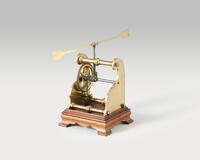
DescriptionModel van een windas met windvleugel
LabelDit instrument dient ter demonstratie van de werking van een zogeheten schoorsteengek: een toestel om een braadspit met behulp van de trek in de schoorsteen te draaien. Om de schoorsteentrek te simuleren blaast men tegen de koperen vaantjes. Hierdoor gaat de wormschroef draaien. De tanden ervan grijpen in een tandrad dat via de as aan het braadspit is bevestigd. Beiden zullen aangedreven door de wormschroef ook gaan draaien. Het toestel werd in 1714 voor het eerst afgebeeld door de Engelse theoloog en wiskundige William Whiston. Op die illustratie werd het toestel gebruikt om met behulp van een takelblok een gewicht op te hijsen. In die samenstelling kan men er een samenstelling van alle klassieke werktuigen in zien: de windas, de hefboom en de balans (hier de windvanen), de schroef inclusief de wig, en de katrol.
Production date 1750 - 1774
Object namemodel windas
Object categorymodel
CollectionMechanics